

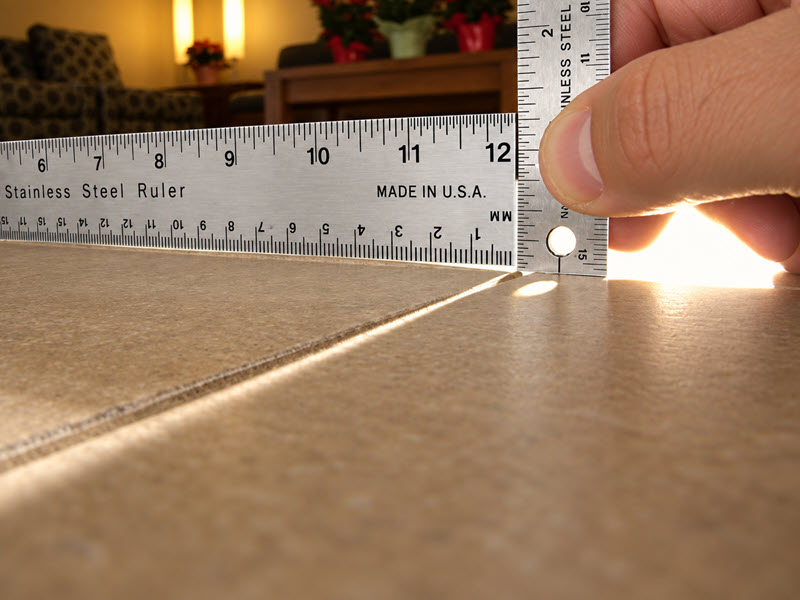
If you spend enough time on tile-related social media, you will eventually come across rants about ceramic tile quality and some version of, "this tile is junk."
More specifically, you'll read how the tile pieces are different sizes, one bows more than another, the color does not match the sample exactly, or the edges will not line up in the grout joint the homeowner expected. Sometimes the criticism is justified. There are legitimate manufacturing defects, second-grade products, and tile that is not appropriate for the intended use.
But many times, what I see is not a manufacturing problem; it is a disconnect between knowledge, expectations, and application.
Before blaming the manufacturer, we need to understand what the product is, what standards allow, and whether it was selected and installed accordingly.
Ceramic Tile Is Not One Product
We often talk about "tile" as though every ceramic tile should behave the same way. It does not.
Porcelain, pressed floor tile, glazed wall tile, quarry tile, mosaics, rectified tile, calibrated tile, natural tile, and specialty tile can have very different characteristics.
ANSI A137.1, American National Standard Specifications for Ceramic Tile, provides the framework for evaluating many of those products. It addresses dimensions, warpage, wedging, physical properties, aesthetic variation, grades, sampling, and acceptance criteria.
The allowable limits are not identical for every type of tile. You cannot fairly decide whether something is defective until you know what it is supposed to be. For example, a mosaic should not be judged by the same dimensional criteria as rectified porcelain, and a natural tile should not carry the same expectation as a calibrated product.
Tolerance Is Not the Same as Defect
Ceramic tile is a manufactured product, but it is not manufactured to zero tolerance. ANSI A137.1 establishes allowable variation for characteristics such as:
-
facial dimensions and caliber range;
-
thickness;
-
edge and diagonal warpage;
-
wedging or squareness; and
-
facial and structural defects.
Those allowances vary by tile type and size. When someone says, "These tiles aren't all exactly the same size," the better question is whether they are within the allowable tolerance for that product.
Tile can also have measurable warpage and still comply.
ANSI A108.02 recognizes actual tile warpage when evaluating lippage. A good installer must manage the material supplied but cannot manufacture different tile on the jobsite.
Rectified Does Not Mean Perfect
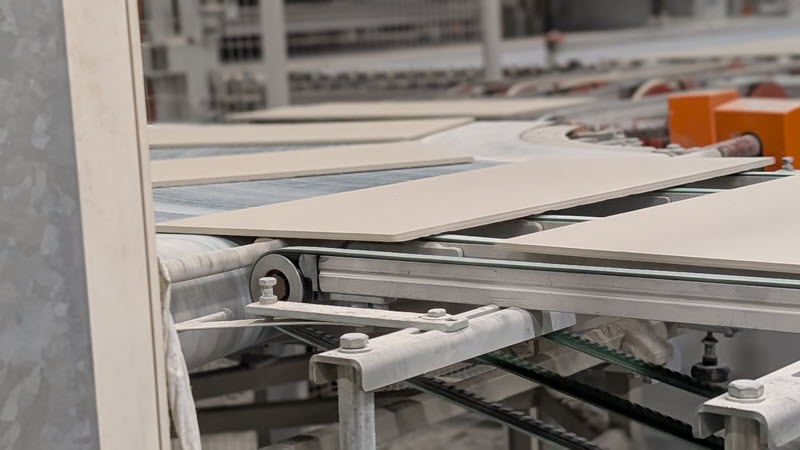
"Rectified" may be one of the most misunderstood words in the tile industry. ANSI A137.1 defines rectified tile as tile whose edges have been mechanically finished to achieve a more precise facial dimension. It does not mean perfectly flat, perfectly identical, or groutless.
Grout Joints
ANSI A108.02 requires grout joints to accommodate the actual dimensional variation of the tile being installed. It provides minimum joint widths for different tile categories and generally requires the joint to be at least three times the actual facial-dimension variation of the tile supplied.
For running-bond patterns, actual edge warpage can require an even wider joint.
In other words, the grout joint shown in an inspiration photo does not automatically determine the grout joint that should be installed. The tile gets a vote.
Warpage & Lippage
Warpage and lippage are related, but not the same. The finished edge condition can be influenced by tile warpage, grout-joint width, workmanship, substrate flatness, lighting, and pattern. It must be evaluated against the applicable criteria.
>> See Do You Have Enough Mortar to Accommodate Tile Warpage?
>> See How Acceptable is Warped Tile?
>> See ANSI Standards: A Tile Installer's Best Friend!
Sometimes the Variation Is the Design
Color and texture are another common source of complaints.
ANSI A137.1 provides aesthetic classifications from V0 through V4. V0 represents a very uniform appearance, while higher classifications intentionally allow more variation. A V3 product may show significant differences among pieces. A V4 product may have substantial random variation, with the final installation expected to have a unique appearance.
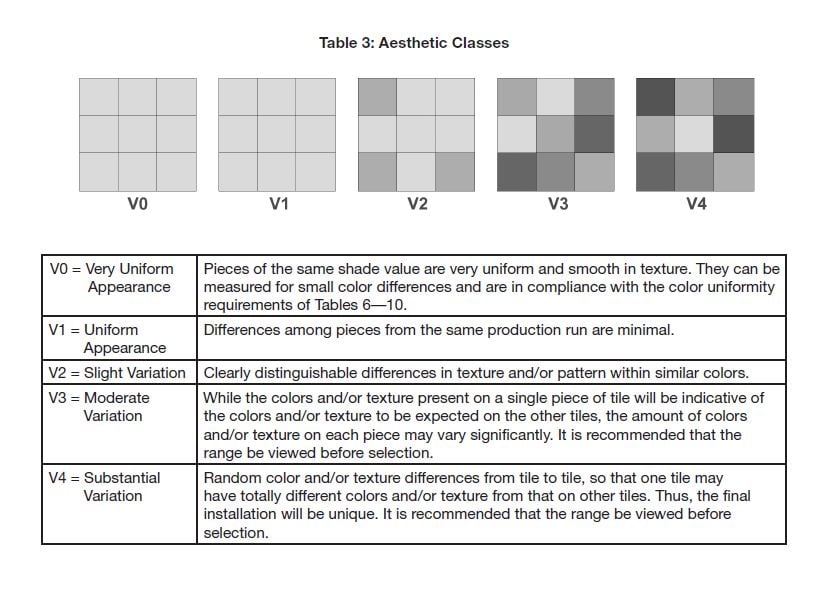 That is why shade information and blending matter. Boxes carrying the same product name are not necessarily interchangeable across shade values or production runs. Even when noticeable variation is not present, installers need to open several cartons and blend pieces throughout the installation. Installing one box at a time can create obvious patches from acceptable material.
>> See How to Prepare for Tile Shade Variation
Read the Box Before You Throw It Away
Shade, caliber, lot or production information, grade, and product identification are useful jobsite information. ANSI A108.02 calls for original containers and labels to remain intact until use. Before installation, someone should be able to answer:
-
Is the material Standard Grade or Second Grade?
-
Do the shade and caliber markings match?
-
Is the product represented as complying with ANSI A137.1?
-
Is the tile appropriate for the intended use?
-
Does the manufacturer identify an aesthetic class or special installation guidance?
-
Is enough matching material available, including reasonable attic stock?
ANSI A137.1 recognizes Standard Grade and Second Grade. "Builder grade" is a marketplace description, not an ANSI grade. The sales channel is not a grading system either. Standards-compliant tile can be sold through a distributor, showroom, home-improvement retailer, or direct source. A distributor may provide more technical support and lot management, but where tile was purchased does not always determine its quality.
The same is true of imported tile.
Some of the finest tile in the world is imported. Country of origin is not a quality classification. Ask what standard the product is represented as meeting and whether the material complies.
Compliant Does Not Always Mean Installer-Friendly
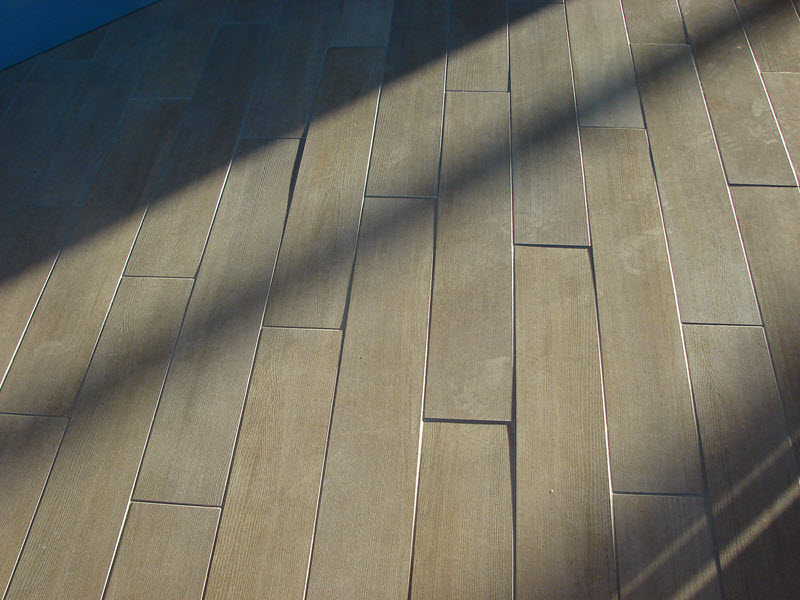
Two tiles can both comply with the standard, and one can still be much easier to install. One may be exceptionally consistent; another may fall closer to allowable limits and require more sorting, blending, layout adjustment, a wider grout joint, or more time. That does not make the second tile defective. Quality, compliance, suitability, and ease of installation are not the same thing.
Pattern selection can compound the issue.
ANSI A108.02 limits specified offsets to 33% or less for rectangular tiles 15 inches or longer in the direction being offset, unless a greater offset is evaluated and approved through a mockup. A 50% brick pattern may place the high point of one warped tile beside the low point of another and exaggerate lippage.
The material may be compliant; the expectation may simply be incompatible with it.
Before You Call It Defective
ANSI A137.1 does not determine product acceptance by looking at three pieces and deciding they look wrong. It establishes sampling plans, test methods, viewing procedures, and acceptance criteria. A consumer does not have to like every compliant tile, but "I don't like this" is an aesthetic judgment; "this tile is defective" is a technical claim.
Installers have a responsibility here as well.
-
Open the cartons.
-
Read the labels.
-
Check shade and caliber.
-
Look at the tile before permanently installing it.
- Measure representative pieces, check warpage, understand the aesthetic classification, blend boxes where appropriate, and confirm that the desired grout joint and pattern are realistic for the actual material.
Samples and mockups exist for a reason.
>> See Why a Tile Installation Mockup is Really Necessary
Ceramic tile can last for decades, but its variety and how to be successful with it require knowledge. Unless you invest time and energy into gaining this knowledge, it may not easily come to you. Attendees of CTEF classes are frequently surprised by what they didn’t know about tile.
The Truth You Need to Hear About Ceramic Tile Quality
The next time a social-media post declares, "Look how bad this tile is," ask a few questions first:
-
Does it meet ANSI A137.1?
-
What type and grade is it?
-
What aesthetic class?
-
Are the shade and caliber consistent?
-
What tolerances apply?
-
What does the manufacturer say?
-
Was the installation designed around the actual tile?
Before we call ceramic tile defective, we should be able to define what "defective" means.
Thanks for reading, and don't hesitate to reach out with questions.